Wednesday, May 19, 2010
Troika
Troika -- a collection of three, from Russian language. And a nice piece of music, above...I can taste the frosty air and hear the snow under my boots :)


Interview with Ripley Davenport

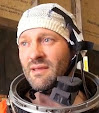
I've just done an interesting Skype interview with Ripley Davenport, the 39-year old explorer on his way tomorrow to Mongolia. He's attempting to cross the steppe country on foot, towing his food and equipment in a cart. Ripley's expedition is particularly interesting to me because I've wanted for some time to incorporate raising money and support for a charity on an expedition, something done more often on European and British expeditions, in my experience, than by Americans. On his first attempt at this trek, just a month ago, Ripley's cart broke down, and he (an Englishman living in Denmark with his wife and two children) returned home to make repairs; his cart is ready to go, and he climbs onto a plane for Ulan Bator tomorrow. I'll be digitizing the sound recording I made of the interview in a few days, and I'll post it here. Interesting stories about camels that helped him cross Namibia some time ago, mirages, and a full Coke can he found in the middle of one of the world's truly 'trackless' deserts. For the moment, you can find out about Ripley's expedition here: his expedition profile is pasted below:
Ripley Davenport is a renowned explorer, adventurer, humanitarian, and
inspirational speaker and best known for his demanding expeditions to the
isolated areas of the world, notably accomplished solo and unassisted without
any machine or animal but on foot by hauling or carrying all his equipment.
He avoids the worn tourist paths, and eminent landmarks, favouring instead to
position himself unaided in potentially hostile environments. Without any film
crew, Ripley can continue to pioneer the filming of his genuine experiences
authentically in unforgiving surroundings as his journey develops.

In 2001, he completed a solo and unsupported snowshoe/ski of the Kungsleden
Trail in Northern Sweden from Abisko to Hemavan, via Kebnekaise, in 32 days.
In 1999, he spent several weeks in the company of the Air Tuareg of Niger. The
purpose was to learn about desert living and their culture.
In 1998, Ripley completed a solo trek across the Karakum Desert in 21 days.
Then in the same year, Ripley successfully crossed the Namib Desert, solo and
unassisted, with two camels in 82 days.

Since then Ripley has been fixated with desert exploration and adventure and
he intends on traversing across many of the worlds most isolated deserts.

The list doesn't stop here. Ripley has completed several other expeditions in
addition to raising thousands of pounds for childrens' charities.

He has recently joined the i2P - impossible2Possible team as an Inspirational
Ambassador and remains loyal and dedicated in supporting numerous children's
charities.
Sunday, May 16, 2010
Carl Sagan
What Carl Sagan--who died in 1996-- is reading & speaking here are each great sentences--take it apart, write down the words, and you will see that they are not easy to write; they look simple, but each is tough. It's hard to write this way without being called corny, or intellectual, or high-falutin, or ivory tower. To write like this, much less speak the words on camera, Carl Sagan had to be passionate and in love with the material. When everything around you screams 'here and now', dissolving and devaluating real passion, it's hard to pull off. I'm sure all these problems held also when he made Cosmos, but somehow, somehow, Carl Sagan's producers 'got it' and they let Carl Sagan say what he wanted to say. So good on Carl, but also on his producers.
Friday, May 14, 2010
The Carolinian Star Compass
Rendering for the forthcoming book on the migration of humanity off the Earth's surface; in my effort to dismantle the common conception space colonization as a technocratic, machine-centered endeavor, I will present it as the completely natural continuation of the four-million year legacy of the genus Homo adapting to new environments. My question: why should our adaptation end at the curve of the Earth? To that end, I'll use examples of particularly complex, technologically-intensive adaptations that humanity has already made, here on Earth, even in prehistory. These examples will show that while technology was needed, people were not doing this for the machines, but for humanity itself; people were finding new places to live, from the Pacific to the Arctic. Below, a rending of one example in progress.

Tonight, exhausted by grading and some adminstrivia, I'll take a break and do some work either on illustrations for this or the evolution book, or sketching out some basic refutations of the usual arguments against space colonization, to wit:
* it's too expensive
* it's too difficult
* it's too dangerous
* it is a plaything of the rich
* we have to sort out humanity, first
* all we will do is transport humanity's problems off the Earth and into space
* we cannot just go and ruin the rest of the universe like we are ruining Earth
My coauthor and I will take these arguments apart, piece by piece.

Tonight, exhausted by grading and some adminstrivia, I'll take a break and do some work either on illustrations for this or the evolution book, or sketching out some basic refutations of the usual arguments against space colonization, to wit:
* it's too expensive
* it's too difficult
* it's too dangerous
* it is a plaything of the rich
* we have to sort out humanity, first
* all we will do is transport humanity's problems off the Earth and into space
* we cannot just go and ruin the rest of the universe like we are ruining Earth
My coauthor and I will take these arguments apart, piece by piece.
Tuesday, May 11, 2010
Writer's Tools (II)
Writer's tools (II)
The Wonders of Writing Well
To complement my previous post, which delineated some common writing mistakes and how to avoid them, this post focuses on some common writing successes. These are things that work to connect with the reader and keep them reading. Some are of course just the converse of the points laid out in the previous blog, and when they are, I elaborate to clarify. And, again, subtleties can be debated (though I'd argue the principles are ironclad) and, no, I don't always accomplish these in every work; but I do work at it.
Telling an Old Tale in a New Way: We writers usually tell an old tale; the only reason we didn't quit at Shakespeare (in the West, anyway) is that the world changes, people change (to a degree), and old messages need new context and new telling. Casting wisdom in a new mold lets you communicate that wisdom with modern people. This isn't easy to do, but it's one of the main reasons we keep writing.
Taking the Reader to New Place: Many people do not have the luxury to travel the world, or can't or won't travel across town or even down the street. A good writer can take the reader anywhere. It's not easy, and it requires certain tools and methods, but there are many reasons to do it, one being the same reason to travel; to see things from a different perspective. Breaking a reader out of the bubble of daily time and space--and you can tell you've done it when they tell you they felt like they were right there in that new world--is tremendously rewarding for both writer and reader.
Exploration: This is very similar to Taking the Reader to a New Place, but, in some way I haven't yet sorted out, it's different. I feel this is more motivational; it doesn't necessarily have the function of place-setting for an ancient tale, it simply stimulates the reader to see, and maybe even do. This kind of writing is often somewhat breathless. Dozens of examples rise to mind; here's one from Craig Childs' superb book, The Way Out, in which he describes his exploration of a flooded cavern in the Grand Canyon: "Our headlamps brushed the ceiling, showing a few passages. We went up. Each of us tried a different route, climbing through dust and pieces of rubble. I ascended a chimney, emerging into a room the size of an aircraft hangar. Perhaps seventy feet tall and over a hundred feet long, its ceiling was a lifted dome, its floor a garden of waterfalls and pools. Darkness ate my beam of light toward the back. A quarter-mile into a desert cliff, beneath two thousand feet of solid rock, inside the belly of the mother, was this: a buried grotto with the broken plumbing of a spring sending water everywhere. As I walked, my light took on altering values, passing through swift water, still water, deep water, sheeting water, plumes of mist, and shiny, wet stones. The river ran the width of a street.. That makes me want to drop everything and explore the caves of the Grand Canyon. That motivates me into action, if 'only' charging me for my own projects. This writing, contrary to elemental physics, generates energy from apparent nothing. Exploration can take place in many domains--mine is largely that of the physical universe--but, I think, you get my point.
Revealing the Truth / Exposing Complexity: Presumably readers want clarity, or at least some kind of understanding (at least, the readers I want to communicate with). A writer has the potential to expose truth because reading takes more time and attention than listening to a sound-bite. In John Steinbeck's daily journal he wrote, about taking time with his writing to expose truths, "The human mind, particularly in the present, is troubled and fogged and bee-stung with a thousand little details from taxes to war worry to the price of meat. All these usually get together and result in a man's fighting with his wife, because that is the easiest channel of relief for inner unrest. Now--we must think of a book as a wedge driven into a man's personal life. A short book would be in and out quickly...A long book, on the other hand...instead of cutting and leaving...allows the mind to rearrange itself to fit around the wedge...When the wedge is withdrawn, the tendency of them mind is quickly to heal itself exactly as it was before the attack. With the long book...when the wedge is finally withdrawn and the book is set down, the mind cannot ever be quite what it was before." While plenty can be said for shorter forms, such as short poetry, I think what he was getting at there is the time it takes, in some forms of writing, to clarify. Again, yes, short works can well wash and make clear, but, again, the point--whatever the form--is clarity and the exposure of complexity.
Reminding the Reader of Dignity: The world, as I feel it, shaped largely by commerce, leaves us little dignity; great power lies in the hands of those who constrain our choices, and unless we're careful to protect our own dignity, we are defined by our consumption, we are simply consumers (you can see a clip of how I feel here). Writing in a respectful way reminds us of human dignity. If that is too much social commentary for you, you might want to read someone else. I'm leaning a lot on Steinbeck right now, and here I will use him again: "I intended to make [some of his writing]sound guileless and rather sweet, but you will see in it the little blades of social criticism without which no book is worth a fart in hell." This is very important to me. About it, Antoine de Saint Exupery wrote, "The airplane is a means, not an end. One doesn't risk his life for a plane any more than a farmer ploughs for the sake of the plough. But the airplane is a means of getting away from towns and their book-keeping and coming to grips with reality."
The Crystallization of a Worldview: This is entirely for the writer; the writer, presumably wishing to communicate something clearly--even if it's uncertainty--requires something of a comprehensive worldview; in German, the word weltanschaung, literally translates into world-view, but carries something more organic and expansive that I can't quite outline; it is more a feeling than a statement, a feeling that suffuses everything a writer writes. This worldview is part of one's voice as a writer. Writing, putting your words down in some durable form, forces you, at least in the moment, to assemble the building-blocks of a worldview. This view can change as the world and the writer changes, of course, but having these worldviews, and knowing which ones came before, and even how the one-at-present may be changing, is important to clarity and honesty as a good writer.
As ever, all material © Cameron M. Smith, 2010
The Wonders of Writing Well
To complement my previous post, which delineated some common writing mistakes and how to avoid them, this post focuses on some common writing successes. These are things that work to connect with the reader and keep them reading. Some are of course just the converse of the points laid out in the previous blog, and when they are, I elaborate to clarify. And, again, subtleties can be debated (though I'd argue the principles are ironclad) and, no, I don't always accomplish these in every work; but I do work at it.
Telling an Old Tale in a New Way: We writers usually tell an old tale; the only reason we didn't quit at Shakespeare (in the West, anyway) is that the world changes, people change (to a degree), and old messages need new context and new telling. Casting wisdom in a new mold lets you communicate that wisdom with modern people. This isn't easy to do, but it's one of the main reasons we keep writing.
Taking the Reader to New Place: Many people do not have the luxury to travel the world, or can't or won't travel across town or even down the street. A good writer can take the reader anywhere. It's not easy, and it requires certain tools and methods, but there are many reasons to do it, one being the same reason to travel; to see things from a different perspective. Breaking a reader out of the bubble of daily time and space--and you can tell you've done it when they tell you they felt like they were right there in that new world--is tremendously rewarding for both writer and reader.
Exploration: This is very similar to Taking the Reader to a New Place, but, in some way I haven't yet sorted out, it's different. I feel this is more motivational; it doesn't necessarily have the function of place-setting for an ancient tale, it simply stimulates the reader to see, and maybe even do. This kind of writing is often somewhat breathless. Dozens of examples rise to mind; here's one from Craig Childs' superb book, The Way Out, in which he describes his exploration of a flooded cavern in the Grand Canyon: "Our headlamps brushed the ceiling, showing a few passages. We went up. Each of us tried a different route, climbing through dust and pieces of rubble. I ascended a chimney, emerging into a room the size of an aircraft hangar. Perhaps seventy feet tall and over a hundred feet long, its ceiling was a lifted dome, its floor a garden of waterfalls and pools. Darkness ate my beam of light toward the back. A quarter-mile into a desert cliff, beneath two thousand feet of solid rock, inside the belly of the mother, was this: a buried grotto with the broken plumbing of a spring sending water everywhere. As I walked, my light took on altering values, passing through swift water, still water, deep water, sheeting water, plumes of mist, and shiny, wet stones. The river ran the width of a street.. That makes me want to drop everything and explore the caves of the Grand Canyon. That motivates me into action, if 'only' charging me for my own projects. This writing, contrary to elemental physics, generates energy from apparent nothing. Exploration can take place in many domains--mine is largely that of the physical universe--but, I think, you get my point.
Revealing the Truth / Exposing Complexity: Presumably readers want clarity, or at least some kind of understanding (at least, the readers I want to communicate with). A writer has the potential to expose truth because reading takes more time and attention than listening to a sound-bite. In John Steinbeck's daily journal he wrote, about taking time with his writing to expose truths, "The human mind, particularly in the present, is troubled and fogged and bee-stung with a thousand little details from taxes to war worry to the price of meat. All these usually get together and result in a man's fighting with his wife, because that is the easiest channel of relief for inner unrest. Now--we must think of a book as a wedge driven into a man's personal life. A short book would be in and out quickly...A long book, on the other hand...instead of cutting and leaving...allows the mind to rearrange itself to fit around the wedge...When the wedge is withdrawn, the tendency of them mind is quickly to heal itself exactly as it was before the attack. With the long book...when the wedge is finally withdrawn and the book is set down, the mind cannot ever be quite what it was before." While plenty can be said for shorter forms, such as short poetry, I think what he was getting at there is the time it takes, in some forms of writing, to clarify. Again, yes, short works can well wash and make clear, but, again, the point--whatever the form--is clarity and the exposure of complexity.
Reminding the Reader of Dignity: The world, as I feel it, shaped largely by commerce, leaves us little dignity; great power lies in the hands of those who constrain our choices, and unless we're careful to protect our own dignity, we are defined by our consumption, we are simply consumers (you can see a clip of how I feel here). Writing in a respectful way reminds us of human dignity. If that is too much social commentary for you, you might want to read someone else. I'm leaning a lot on Steinbeck right now, and here I will use him again: "I intended to make [some of his writing]sound guileless and rather sweet, but you will see in it the little blades of social criticism without which no book is worth a fart in hell." This is very important to me. About it, Antoine de Saint Exupery wrote, "The airplane is a means, not an end. One doesn't risk his life for a plane any more than a farmer ploughs for the sake of the plough. But the airplane is a means of getting away from towns and their book-keeping and coming to grips with reality."
The Crystallization of a Worldview: This is entirely for the writer; the writer, presumably wishing to communicate something clearly--even if it's uncertainty--requires something of a comprehensive worldview; in German, the word weltanschaung, literally translates into world-view, but carries something more organic and expansive that I can't quite outline; it is more a feeling than a statement, a feeling that suffuses everything a writer writes. This worldview is part of one's voice as a writer. Writing, putting your words down in some durable form, forces you, at least in the moment, to assemble the building-blocks of a worldview. This view can change as the world and the writer changes, of course, but having these worldviews, and knowing which ones came before, and even how the one-at-present may be changing, is important to clarity and honesty as a good writer.
As ever, all material © Cameron M. Smith, 2010
Writer's Tools
Some tools for writers; spotting mistakes, and fixing them. I have made all of these mistakes, and continue with some of course, but I'm getting better at knowing when I'm making them. Some are easier to be aware of than others. Not all apply to all writers, all kinds of writing, or even all stages of a writing career; they are things I've learned, sometimes from my own mistakes (I see one already committed in a book chapter meant to go out in the morning--so my evening will be expended in fixing a paragraph), and sometimes from others'. Every point could be argued, this way and that, in a fun evening at the pub. I have my biases and preferences, and they're obvious below. I think they're relatively benign RE advice to an aspiring writer or even to myself. I'm sure all of this has been written before, but I don't care; writing it out has been useful for me and may be useful to others. Well; it all goes in the hopper.
* Writing Too Quickly: Deadlines can motivate, but they also lead to compromises. Stay organized with a writing calendar and schedule your work. Truck drivers, the old writers' saw goes, are not allowed to have 'Truck Drivers' Block.' On the other hand, writing well is not truck driving (however subtle good truck driving might be.) Writing well is like painting or drawing well, it is not easy. A good sentence can represent hours of work. "I sweat over every word," Irwin Shaw said.
* Distraction: You cannot write well without full concentration. When it is time to write, people who wish to have contact with have to think of you as off to South America (as Norman Mailer said); you will not be back for some time, not even a little. Quarterbacks, airline pilots, mountain guides, train drivers, and other professionals do not engage with others while they're working--they don't take phone calls or answer the door--and at least some writers (like me) can't, either.
* Writing for Money: Writing is a grinding, inefficient way to try to get your hands on money. Well-paying jobs are rare. The Authors' Guild reports that 95% of American writers do not make their primary income from writing. Writing for money, like writing too quickly, leads to compromises. You're normally writing for so little that you're doing it for yourself, and you might as well have the self-respect to do it well. Keep your day job, then compartmentalize your writing time to eliminate all distraction so that you produce good work. Eventually, the money comes in because the work is good. Yes, crummy writing may sell, but is that what you want to do--sell crummy writing?
* Not Doing Your Research: If you want to tell the truth in writing, which you must do even in fiction, you have to know your topic. Even if you don't directly use a single fact you learn about your topic, one false word or tone and your reader will rightly lose confidence in you. Know the material inside and out; it will come through in the writing--or, at least, ignorance won't.
* Being Too Close or Too Distant: Writing too close to the reader can come off as 'cutesy' or taking liberties. Writing too far off, though, comes across as high-and-mighty. This is extremely delicate ground, though; some readers (like me) prefer some distance between author and reader, others want the author right there. Again, very thin ice, here. As Galadriel said in the The Lord of the Rings: “The quest stands upon the edge of a knife. Stray but a little and it will fail.”
* Tension: A reader can tell whether or not the author is relaxed. A written work can be tense, but that tension must be manufactured by the author. A genuinely tense author gushes, revealing too much about their own state. Before his writing on East of Eden on March 23, 1951, John Steinbeck--in his daily journal entry to his editor--ranted about the low quality of his pencils; "Points break and all hell breaks loose" he wrote. But by the end of the entry he wrote, "I have lost the sense of rush with which I started this [the day's work] and that is exactly what I intended to do.”
* Looseness: A reader can tell whether or not the author is being loose with their words and therefore their thinking and therefore their attention to the reader. A loose author sounds inebriated, they write for self-indulgence and the reader is an afterthought. Pick material you care about, and focus on saying what you want to say, in your chosen form.
* Trying Not to Offend: Trying to please everyone leads to compromises with words--and you must use exactly the right word, no matter what--and facts, which are so easily blurred to fit your purposes. Naturally, a good author considers the audience, and there are conventions for some kinds of writing, but personal narratives in which everything is peachy-keen and everyone is filled with light come off, rightfully, as sickly-sweet. Honesty will gain the reader's trust, which is everything. The reader doesn't have to like you, but they do have to trust you. Above I wrote that writing was not truck driving. Then, to avoid offending any truck-drivers or friends whose relatives may be truck drivers (and so on), I Tried Not To Offend by adding this: "(however subtle good truck driving might be.)" I've kept this parenthetical only because it's such a good illustration of a mistake. One more example; Anthony Bourdain, whom you may not like and who may actually exaggerate on occasion, writes very well and does not try to please everyone; in Kitchen Confidential he wrote, "Vegetarians, and their Hezbollah-like splinter-faction, the vegans, are a persistent irritant to any chef worth a damn." I know at least one vegetarian who has laughed at that. You may not like Bourdain, but at least you know he's not schmoozing you.
* Not Listening to Advice: While you mustn't write-to-not-offend, you should listen to good advice from readers. A good writing group can be hard to find--members have to be able to give and take useful critique, which is a skill--but is important. A good writing group can help you, over a few years, to find your voice, and that is done by analyzing your writing time and again. Listen to readers and writers, determine what you're willing to adjust, and then do it. Don't forget that you will need some kind of armor. Not everybody has to see it, but you will need it. Be sure, in your writing group, to edit other writers' work with complete attention; give them reason to be equally exacting about your work.
* Not Being In Love With the Subject: Whether or not passion is overt in the work, you have to be passionate about the subject to write well. Passion ultimately exposes truth, and good writing is about truth. Lack of passion will flavor the writing with weak, noncommittal wording and a depressing mediocrity. Don't undertake a writing project unless you're passionate about the material. The most dismal examples of passionless writing I have seen are in travel magazines, where the author is once again reviewing a 'breathtaking sunrise' or a 'charming villa'. These unfortunate writers are exhausted. They are ‘calling in’ a performance and, arguably, wasting their own time and yours.
* Copying: Aspiring writers want to sound 'just like X' but everyone can tell if you copy another author. A good author's voice is distinctive, it is their own, though it can be well-informed by their attention to other writers. It can take years to work past copying, and even after this time, you must re-read your material to be sure you're not copying subconsciously. Develop your own voice through years of diligent work and by taking to time to know who you are and what you have to bring to the world of readers.
* Exaggerations: In editing you may see that you've written an exaggeration, and that should remind you that you're using a crutch. Things aren't compelling enough without a side-show, and that's a red flag to reconsider the whole work. For the reader, an exaggeration says that the writer might just make up anything...so why keep reading? Don't exaggerate. Our own lives are more compelling than any movie, but we're often too bedazzled by movies to remember it. Write about things that don't need exaggeration. The horror of reality TV is that it is a lie posing as truth; fiction, although it might communicate great truth, at doesn't pretend to be truth. Pick a genre.
* Putting Yourself in the Work: Unless you are already well-known to the world, nobody cares about your specific experience or troubles. The reader cares about what they can identify with, and that may well be your specific experiences or troubles, but they have to be told that way; the author is a vehicle. A story of hearbreak is excruciating to read unless it communicates some new insight (which the reader can learn from and apply to their own life) or reiterates an old lesson (which the reader can learn from and apply to their own life). A lot of an author's personal writing should remain in a journal. Well enough for the author to write that, and in writing it understand themselves to improve the writing, but pouring it out for everyone can reveal too much. Ray Bradbury, in an interview in The Paris Review, addresses the issue when talking about his writing in a very general way: "I write metaphors. Every one of my stories is a metaphor you can remember. The great religions are all metaphor. We appreciate things like Daniel and the lion’s den, and the Tower of Babel. People remember these metaphors because they are so vivid you can’t get free of them..." See? Even when Bradbury is talking about himself, he's not really talking about himself.
Yep, it's a lot to keep in mind, and these are only things that come to mind right now; emergencies come up, the wrong word can collapse a work in a moment! Alarm! And if you don't think a single word can do that, if you don't feel that strongly about the writing, you're not going to write well.
When you have cleared your mind to write, and sit down to do it, you may as well be climbing into a cockpit. To me, it's that important to get it right.

As ever, all material © Cameron M. Smith, 2010
* Writing Too Quickly: Deadlines can motivate, but they also lead to compromises. Stay organized with a writing calendar and schedule your work. Truck drivers, the old writers' saw goes, are not allowed to have 'Truck Drivers' Block.' On the other hand, writing well is not truck driving (however subtle good truck driving might be.) Writing well is like painting or drawing well, it is not easy. A good sentence can represent hours of work. "I sweat over every word," Irwin Shaw said.
* Distraction: You cannot write well without full concentration. When it is time to write, people who wish to have contact with have to think of you as off to South America (as Norman Mailer said); you will not be back for some time, not even a little. Quarterbacks, airline pilots, mountain guides, train drivers, and other professionals do not engage with others while they're working--they don't take phone calls or answer the door--and at least some writers (like me) can't, either.
* Writing for Money: Writing is a grinding, inefficient way to try to get your hands on money. Well-paying jobs are rare. The Authors' Guild reports that 95% of American writers do not make their primary income from writing. Writing for money, like writing too quickly, leads to compromises. You're normally writing for so little that you're doing it for yourself, and you might as well have the self-respect to do it well. Keep your day job, then compartmentalize your writing time to eliminate all distraction so that you produce good work. Eventually, the money comes in because the work is good. Yes, crummy writing may sell, but is that what you want to do--sell crummy writing?
* Not Doing Your Research: If you want to tell the truth in writing, which you must do even in fiction, you have to know your topic. Even if you don't directly use a single fact you learn about your topic, one false word or tone and your reader will rightly lose confidence in you. Know the material inside and out; it will come through in the writing--or, at least, ignorance won't.
* Being Too Close or Too Distant: Writing too close to the reader can come off as 'cutesy' or taking liberties. Writing too far off, though, comes across as high-and-mighty. This is extremely delicate ground, though; some readers (like me) prefer some distance between author and reader, others want the author right there. Again, very thin ice, here. As Galadriel said in the The Lord of the Rings: “The quest stands upon the edge of a knife. Stray but a little and it will fail.”
* Tension: A reader can tell whether or not the author is relaxed. A written work can be tense, but that tension must be manufactured by the author. A genuinely tense author gushes, revealing too much about their own state. Before his writing on East of Eden on March 23, 1951, John Steinbeck--in his daily journal entry to his editor--ranted about the low quality of his pencils; "Points break and all hell breaks loose" he wrote. But by the end of the entry he wrote, "I have lost the sense of rush with which I started this [the day's work] and that is exactly what I intended to do.”
* Looseness: A reader can tell whether or not the author is being loose with their words and therefore their thinking and therefore their attention to the reader. A loose author sounds inebriated, they write for self-indulgence and the reader is an afterthought. Pick material you care about, and focus on saying what you want to say, in your chosen form.
* Trying Not to Offend: Trying to please everyone leads to compromises with words--and you must use exactly the right word, no matter what--and facts, which are so easily blurred to fit your purposes. Naturally, a good author considers the audience, and there are conventions for some kinds of writing, but personal narratives in which everything is peachy-keen and everyone is filled with light come off, rightfully, as sickly-sweet. Honesty will gain the reader's trust, which is everything. The reader doesn't have to like you, but they do have to trust you. Above I wrote that writing was not truck driving. Then, to avoid offending any truck-drivers or friends whose relatives may be truck drivers (and so on), I Tried Not To Offend by adding this: "(however subtle good truck driving might be.)" I've kept this parenthetical only because it's such a good illustration of a mistake. One more example; Anthony Bourdain, whom you may not like and who may actually exaggerate on occasion, writes very well and does not try to please everyone; in Kitchen Confidential he wrote, "Vegetarians, and their Hezbollah-like splinter-faction, the vegans, are a persistent irritant to any chef worth a damn." I know at least one vegetarian who has laughed at that. You may not like Bourdain, but at least you know he's not schmoozing you.
* Not Listening to Advice: While you mustn't write-to-not-offend, you should listen to good advice from readers. A good writing group can be hard to find--members have to be able to give and take useful critique, which is a skill--but is important. A good writing group can help you, over a few years, to find your voice, and that is done by analyzing your writing time and again. Listen to readers and writers, determine what you're willing to adjust, and then do it. Don't forget that you will need some kind of armor. Not everybody has to see it, but you will need it. Be sure, in your writing group, to edit other writers' work with complete attention; give them reason to be equally exacting about your work.
* Not Being In Love With the Subject: Whether or not passion is overt in the work, you have to be passionate about the subject to write well. Passion ultimately exposes truth, and good writing is about truth. Lack of passion will flavor the writing with weak, noncommittal wording and a depressing mediocrity. Don't undertake a writing project unless you're passionate about the material. The most dismal examples of passionless writing I have seen are in travel magazines, where the author is once again reviewing a 'breathtaking sunrise' or a 'charming villa'. These unfortunate writers are exhausted. They are ‘calling in’ a performance and, arguably, wasting their own time and yours.
* Copying: Aspiring writers want to sound 'just like X' but everyone can tell if you copy another author. A good author's voice is distinctive, it is their own, though it can be well-informed by their attention to other writers. It can take years to work past copying, and even after this time, you must re-read your material to be sure you're not copying subconsciously. Develop your own voice through years of diligent work and by taking to time to know who you are and what you have to bring to the world of readers.
* Exaggerations: In editing you may see that you've written an exaggeration, and that should remind you that you're using a crutch. Things aren't compelling enough without a side-show, and that's a red flag to reconsider the whole work. For the reader, an exaggeration says that the writer might just make up anything...so why keep reading? Don't exaggerate. Our own lives are more compelling than any movie, but we're often too bedazzled by movies to remember it. Write about things that don't need exaggeration. The horror of reality TV is that it is a lie posing as truth; fiction, although it might communicate great truth, at doesn't pretend to be truth. Pick a genre.
* Putting Yourself in the Work: Unless you are already well-known to the world, nobody cares about your specific experience or troubles. The reader cares about what they can identify with, and that may well be your specific experiences or troubles, but they have to be told that way; the author is a vehicle. A story of hearbreak is excruciating to read unless it communicates some new insight (which the reader can learn from and apply to their own life) or reiterates an old lesson (which the reader can learn from and apply to their own life). A lot of an author's personal writing should remain in a journal. Well enough for the author to write that, and in writing it understand themselves to improve the writing, but pouring it out for everyone can reveal too much. Ray Bradbury, in an interview in The Paris Review, addresses the issue when talking about his writing in a very general way: "I write metaphors. Every one of my stories is a metaphor you can remember. The great religions are all metaphor. We appreciate things like Daniel and the lion’s den, and the Tower of Babel. People remember these metaphors because they are so vivid you can’t get free of them..." See? Even when Bradbury is talking about himself, he's not really talking about himself.
Yep, it's a lot to keep in mind, and these are only things that come to mind right now; emergencies come up, the wrong word can collapse a work in a moment! Alarm! And if you don't think a single word can do that, if you don't feel that strongly about the writing, you're not going to write well.
When you have cleared your mind to write, and sit down to do it, you may as well be climbing into a cockpit. To me, it's that important to get it right.

As ever, all material © Cameron M. Smith, 2010
Monday, May 10, 2010
Disconnection
To take this kind of thing seriously demands disconnection from just about everything we're told is important.
Subscribe to:
Posts (Atom)