Tuesday, July 15, 2008

Helmet Test Flight #1


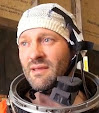
Over the weekend a few test flights with the customized paragliding helmet I'll use in Alaska this coming winter; in the image above, I'm coming in for landing over some vehicles on the beach at Cape Kiwanda. In the video below, you can see launch, flight and landing by several cameras, including my helmet-cam.


I haven't found the words, yet, to describe flying, but I will.


Monday, July 7, 2008

The Sunken Forest


While Blackwater Lake was still, Gee Creek water is active, and the flow increases where the creek narrows. Yesterday I lashed into a line and swam out to the middle where I hooked the line over a branch to avoid being swept downstream. Todd held the other end of the line and when it was time for me to dive, he paid it out. Deep breath and then face down, suddenly I can't see anything, not even my hand a foot in front of my mask; only a uniform, toffee-colored silty riverstream flowing against my body. To go down I have to hand-over-hand down a branch, and at the bottom I grope blindly, branches grabbing at me, threatening to hook my lifeline. When I wrap an arm deep in the muck and under a log the log slowly rises and starts to tilt back at me with the current. Water is 800 times denser than air, and even a three-mile an-hour current easily swings waterlogged logs like toys. The log tilts back, I can feel the mass of it coming up like heavy post and now it sways at me and I roll to the side and let it pass. I can't see it but I can sense its mass drifting past me to settle with a soft, scary thud a few feet downstream. Still nothing to see, just the opaque tan haze against my maskplate, just an inch from my eyes. Used to SCUBA diving, I feel strange unable to take a breath here underwater. The branch I'm holding vibrates slightly, humming in the current. Now a hard, slick branch or log bumps my side then slides downstream, it's time to go up; I don't like moving objects coming at me out of nowhere. At the surface I resist the temptation to go ashore. I keep diving until I feel comfortable--or at least not completely uncomfortable--skin-diving among the timbers and snags of this little Sunken Forest.

Above, a sketch of something you can't actually see. This is grease pencil and graphite on paper, scanned and then the lower half inverted. I'm experimenting with this medium because next month Dad will be teaching me lithography. Below I hang onto the line, about to dip down.


Todd Olson is maintaining a website of our search for underwater artifacts on the Ridgefield National Wildlife Refuge (yes, we have permits :)).

Monday, June 30, 2008

Swamp Thing


Wading into Blackwater Lake the water feels cool at first, in the shallows. But when I'm chest deep and deeper, and a tangled network of duckweed hides just below the surface, it's warmer. There is so much life in the lake -- squirming and flitting fishes, aquatic insects, underwater blooms of microbes -- that the water seems faintly carbonated, fizzing and bubbling. Diving down I drop through a three-foot layer of misty jade, where the canoe above blurs out, a smudge of color. Then down two more feet and suddenly all light is shut out by a layer of suspended muck, opaque and blinding as squid-ink. My dive light, mounted on my wrist, doesn't even begin to cut through the murk. Groping below blindly I thrust my arm into the lake floor, a silty goop at least three feet deep. Up to my shoulder, I feel no solid lake floor. Finally I draw up my arm and push upwards through the blackness into the green and then the green is washed out by a generic white light of the sky above and then I push up through silver, breaking the surface, my body draped with vegetation. I hang onto the side of the canoe and breathe again. I tell Todd and Chuck what I've seen. The lake surface is bubbly and humped with a few weed-heads close by, but further off it's level and reflects the sky like a mirror.

You can read Todd's reports about the project here.

Monday, June 23, 2008

Star Horse


Up here on Parrett Mountain, Oregon, they use horses to harvest timber carefully, selectively and sustainably. The horses' hooves--shod with iron--are big as soup bowls, and the forest floor shakes when they stamp. I photographed two; one, in the photo above, has a star-like, camoflague-like pattern on his coat. It also looks like the light-struck sea-watery coloration of a whale's hide. Below, two horses (brothers) haul a small log. Yes I use a computer ever day, and no I don't want to give it up. But yes, there are some things about which we can say To Hell With the Modern World...as in logging. This is sane. Clearcutting, whatever timber lobbyists tell you, isn't.

Monday, June 9, 2008

Seawater and the Rapture of the Deep


Watching a whale devour a squid on TV the other night I wondered just what a feeling of health and vitality that whale must have, how charged it must be by a diet of raw living flesh and stinging saltwater. It must be a glorious feeling. I'm not tempted to go on some kind of raw food diet, but I am tempted to eat more raw food and drink more raw juice.

This weekend I experienced a moment of vitality and charge I still can't shake: my diving partner, Todd Olson, and I dropped 100 feet from a bouy in Hood Canal (Puget Sound, Washington), lashed a line to a cement block on the sea floor, and then ran the line down, down down a silty slope to 120 feet, then 130 feet, where breathing becomes harder and the delirium of nitrogen narcosis--what Jacques Cousteau famously called "the rapture of the deep" can start to make the world tilt strangely. Completely negatively bouyant, with my bouyancy vest deflated, I tramped downslope, as in the sketch above, while Todd followed a foot or so behind, completely blinded by the silt I was kicking up. When we turned around at 130 I had to haul myself up the line; air was running low and I didn't want to use it to inflate my vest. 'Batmanning' up the slope under the pressure so much dark seawater above was unbelievably exhilarating.

I'm writing something about this experience, now...but it'll take a little while.

Below, a sketch of moon jellyfish (Aurelia aurita), one of a cloud of these organisms we swam through on a different dive.

Tuesday, June 3, 2008

Cyanea capillata


"Jellyfish" is a crude word for a thing that's not really jelly (it's mostly water, and about 10% protein), and definitely isn't a fish (fish have backbones and fins). When I was learning to scuba dive all eyes were on the starfish or anemones, and the jellies were just dismissed as a nuisance. But now I want to study them up close, and next time I'm in the ocean I'll pay more attention. In the photo, a lion's mane jellyfish (Cyanea capillata, or, as most people know it, a "Medusa") in Puget Sound. Arctic Cyanea can have a diameter of up to seven feet and tentacles over 100 feet long! Some jellyfish have brains; in fact, one species has four brains processing the light intake of 24 eyes. Jellyfish have been around for over 600 million years; they can tell up from down, their sting can be mild or deadly, and they normally live less than a few days, though some species are thought to live for decades. You can see one swimming here, and learn a little more about them here. My drawing above (click for the bigger version) from a recent dive. I'm just about done with making an underwater tablet to draw with; grease pencil on white tablet. I'll be able to draw underwater, looking directly at the subject rather than relying on memory.

Tuesday, May 27, 2008

Different Days


It used to be that wild animals surrounded humanity. Of course, today humanity surrounds animals, as when you see a polar bear trapped in a zoo...Picture above is my copy of a medieval depiction of a wolf attack. This poor man is in big trouble! Although there aren't many instances of wolves killing humans in the Americas (actually, 19th-century hunters pretty much exterminated wolves in the lower 48, which kinda turns the tables), in post-plague medieval Europe this might have been a pretty genuine worry.
By the way, my Aussie buddies, Chris and Clark, are back in action up in Canada; have a look! Picture below is a recent image of Chris hauling his "PAC" expedition cart. As the tundra melts over the next 100 days, the big kevlar wheels will bouy the guys across hundreds of miles of soggy, marshy terrain...at least that's the plan :o You never know what's going to happen, and that's more than half the point.

And, finally, a tremendous, spooky, shocking, electrifying piece of music by Modest Mussorgsky (can you ever beat the Russians for drama?) here conducted by Italian Carlo Tenan. Listen to this alone in the dark and if your hair doesn't stand on end...well, I can't help you!


Pictures at an Exhibition; just over four minutes of the whole symphony.