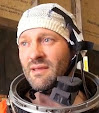
Cameron M. Smith
ABSTRACT
Designing interstellar starships for human migration to exoplanets requires establishing the starship population, which factors into many variables including closed-ecosystem design, architecture, mass and propulsion. I review the central issues of population genetics (effects of mutation, migration, selection and drift) and demographics (population size, age, and sex structure on departure) for human populations on such voyages, specifically referencing a roughly 5-generation (c.150-year) voyage currently in the realm of thought among the Icarus Interstellar research group. I present several formulae as well as concrete numbers that can be used to help determine populations that could survive such journeys in good health. I find that previously-proposed multigenerational voyage populations, on the order of a few hundred individuals, are significantly too low to consider based on current understanding of vertebrate (including human) genetics and population dynamics. Population genetics theory, calculations and computer modeling determine that a properly-screened and age- and sex-structured total founding population (Nc) of anywhere from roughly 14,000 to 44,000 people would be sufficient to survive such journeys in good health. A safe and well-considered Nc figure is 40,000, an ‘IMP’ or interstellar migrant population composed of an effective population [Ne] of 23,400 reproductive males and females, the rest being pre- or post-reproductive individuals. This number would maintain good health over five generations despite (a) increased inbreeding resulting from a relatively small and isolated human population, (b) depressed genetic diversity due to the founder effect, (c) demographic change through time and (d) expectation of at least one severe population catastrophe over the 5-generation voyage.
Estimation of a Genetically and Demographically Viable Founding Population for Multigenerational Interstellar Voyaging
Department of Anthropology
Portland State University
August 2013
9,237 words, discounting references
Saturday, September 7, 2013
Interstellar Migration Population paper; Edits and Revamp


Monday, September 2, 2013
Altitude Chamber Audio
Link: HERE.
2015 Flight Garment Modifications

Everything begins with a pencil, paper, and a calculator. Today's 6am sketch of mods for the Generation II suit to be used in the 2015 Project Alpha flight, which will take me by gas balloon to above the Armstrong Line (63,000 feet), where a properly-functioning pressure garment (or capsule) is essential for human life. An ascent rate of about 1000 feet per minute will take me up in about an hour, descent taking somewhat longer. The flight will test communications systems, life-support systems, offshore launch and recovery operations, and many other systems and procedures to be used in Copenhagen Suborbitals' manned rocket flights, scheduled for some time within the next five or so years. In 2014 I will go back to Copenhagen for water landing and other training, and in 15 to do the actual flight. No time to lose!
Saturday, August 31, 2013
Altitude Chamber Test Video
Klaus Mejling put together a video of the altitude chamber test. The crash in my oxygen saturation, mentioned by Kristian in the video, has been resolved as a known issue and is no longer a problem. The suit and life-support performed perfectly.
Direct link.
Wednesday, August 28, 2013
Galileo's Cage
GALILEO [describing a 17th century model of the cosmos to his student, ANDREA]: Here is a band with the sun on it and on the inside band is the moon.


ANDREA: Crystal spheres?


GALILEO: Like huge soap bubbles one inside the other and the stars are supposed to be tacked onto them. Spin the band with the sun on it. [Andrea does so]. You see the ball fixed in the middle?


ANDREA: Yes.


GALILEO: That's the earth. For two thousand years man has had faith that the sun and all the host of stars circle about him. Well. The Pope, the cardinals, the princes, the scholars, captains, merchants...all pictured mankind squatting in the middle of an affair like that.


ANDREA: Like in a cage?


GALILEO: So you sensed that.
From 'Galileo' by Berthold Brecht. I'd sure like to see a stage production of this. I am getting a lot out of reading this a few times in the past few mind-boggling weeks.
Tuesday, August 27, 2013
Altitude Chamber Check-Out

.jpg)


Alt chamber test all well. Whacked out at airport headed home. Suit worked. Self medically checked out for high balloon flight in 2015. Great week!
Sunday, August 25, 2013
Whittling Down the Bailout Time

We are getting the bailout time towards reasonable. Today I did 40 minutes in the launch position to look for points of pain, cramps, and so on. Afterwards, another bailout test, this time yet faster and more believable. Tomorrow -- free-fall test, and then Tuesday the Altitude Chamber here in Copenhagen! Bailout video below--in the background, the sounds of Peter building his giant liquid oxygen-alcohol rocket, to be tested this time next year. Also next year weøll be doing water landing training and starting to lay in the details of my 2015 balloon flight to 65,000 feet or so.